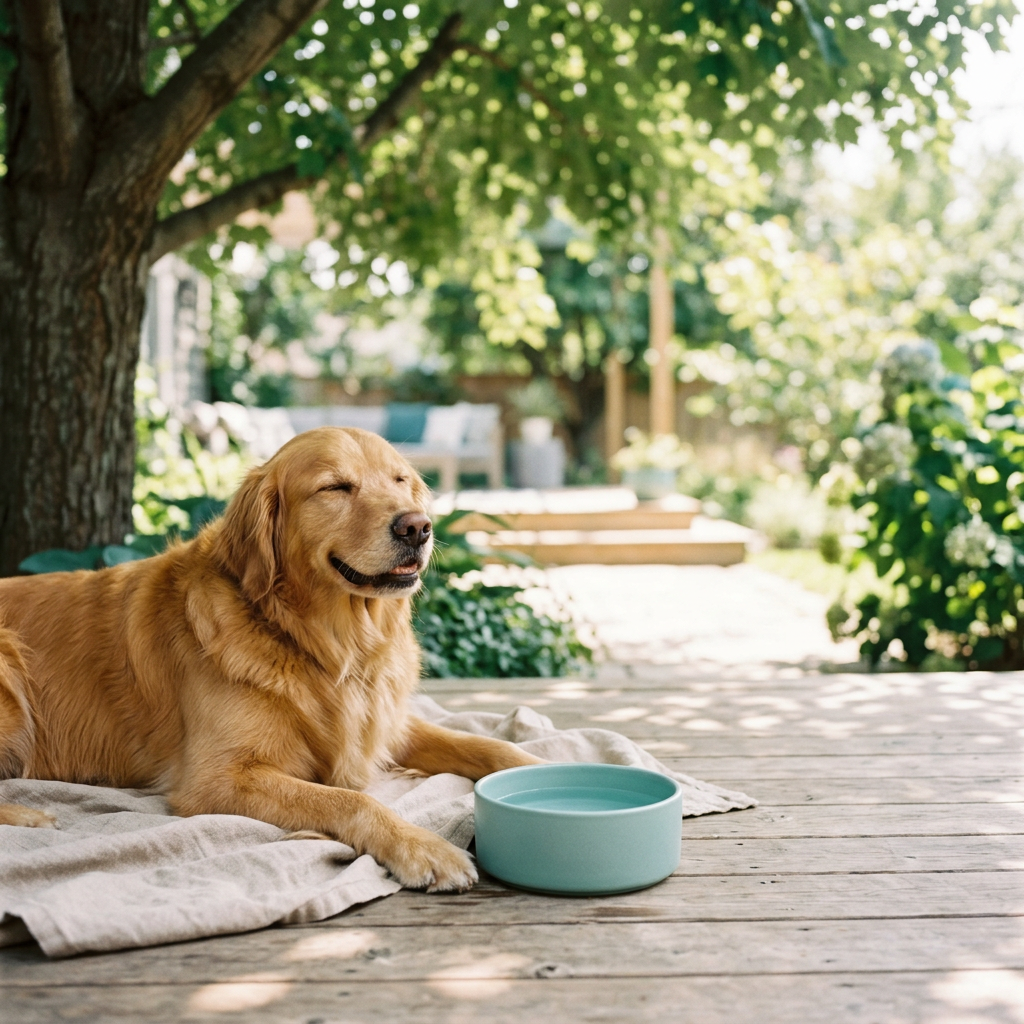
Dogs don't sweat the way we do. Panting is their main way to cool down — moving air over a wet tongue to shed heat — so some panting is completely normal, especially after exercise, in warm weather, or when a dog is excited. The question owners actually need answered is: when is panting telling me something is wrong? In a climate like Dubai's, getting this right can be genuinely important.
Here's how to read it.
When panting is normal
Expect — and don't worry about — panting that is proportionate and self-resolving: after a walk or play, on a hot day, or during excitement, easing off within a reasonable time once your dog rests, cools down or calms. This kind of panting is rhythmic, your dog looks otherwise comfortable, and their gums stay a healthy bubble-gum pink.
Flat-faced (brachycephalic) breeds like French Bulldogs and Pugs pant more readily and struggle more in heat — normal for them in one sense, but also a reason for extra caution, because they overheat far more easily.
Red flags: panting that needs attention
Be concerned when panting is out of context, excessive, or comes with other signs. See a vet — urgently if severe — when you notice:
- Panting with no obvious trigger — heavy panting when your dog is at rest, in the cool, and hasn't exercised
- Signs of overheating — frantic panting, drooling, bright red gums, wobbliness, vomiting or collapse in the heat (possible heat stroke — a life-threatening emergency; see heat stroke in Dubai's pets)
- Panting that looks like distress — a tense posture, restlessness, an inability to settle, or panting alongside whining, which can signal pain
- Difficulty breathing — noisy or laboured breathing, blue or pale gums, or a dog that won't lie down to rest (seek care immediately)
- Panting plus other changes — increased thirst, a pot-belly and hair loss (possible Cushing's disease), or coughing and tiring easily (possible heart disease)
- New night-time panting in a dog that used to sleep soundly
The common thread: panting that doesn't fit the situation, or arrives with any other symptom, is worth investigating.
The main causes behind excessive panting
Beyond simple heat and exercise, vets most often look for:
- Heat and heat stroke. The most urgent cause in the UAE. Dogs can overheat fast — on a hot walk, in a car, or on scorching pavement. Heat stroke is an emergency.
- Pain. Panting is a common, easily missed sign of pain, from arthritis to an acute injury or abdominal problem — often with restlessness or a reluctance to be touched.
- Anxiety and stress. Fear (fireworks, travel, vet visits) triggers panting; it should settle once the trigger passes.
- Cushing's disease. Excess cortisol classically causes panting, increased thirst and appetite, and a pot-bellied look.
- Heart or respiratory disease. Reduced oxygen delivery drives faster, heavier breathing, often with coughing or exercise intolerance.
- Medications. Steroids, in particular, commonly increase panting.
A special word on Dubai's heat
For much of the year, the safest assumption is that the environment is working against your dog. Walk in the cool of early morning or late evening, never leave a dog in a parked car even briefly, watch flat-faced and senior dogs especially closely, and learn the early signs of heat stroke. If your dog is panting frantically and struggling to cool down, treat it as an emergency: move to shade or air-conditioning, wet them with cool (not ice-cold) water, offer small sips, and get to a vet.
The bottom line
Panting is normal — until it isn't. The judgement call is context: panting that matches heat, exercise or excitement and eases with rest is fine, while panting that appears at rest, looks like distress, won't settle, or arrives with any other sign deserves a vet's attention. In Dubai's climate, err toward caution — especially with flat-faced and senior dogs, for whom overheating is a real and rapid danger.
Frequently asked questions
When should I worry about my dog panting? Worry when panting doesn't fit the situation — heavy panting at rest, in the cool, without exercise — or when it comes with other signs: bright red or pale gums, drooling and wobbliness in the heat (possible heat stroke), restlessness and an inability to settle (possible pain), laboured breathing, or coughing and tiring easily. Any of these warrants a prompt vet visit.
Why is my dog panting at night when it's not hot? New night-time panting in a dog that used to sleep well can reflect pain (such as arthritis), anxiety, or conditions like Cushing's or heart disease. Because it's out of context, it's worth having your vet investigate rather than assuming it's nothing.
Is heavy panting a sign of heat stroke? It can be. Frantic, heavy panting with drooling, bright red gums, wobbliness, vomiting or collapse in the heat is a medical emergency. Begin cooling with cool (not ice-cold) water and get to a vet immediately — heat stroke can be fatal and progresses quickly.
Do flat-faced breeds pant more? Yes. Brachycephalic breeds like French Bulldogs and Pugs pant more readily and cool far less efficiently, so they overheat much more easily. Extra caution in the heat is essential for them.
Read the signs with Stay
Stay's symptom checker helps you judge whether your dog's panting is routine cooling or a reason to act, and Stay keeps a record of heat-season risks and health changes over time. AI assists; experts decide. Join the Stay waitlist.
Important note
This article is decision-support information, not veterinary advice, and does not diagnose your individual pet. If your dog is panting heavily without an obvious cause, appears distressed, or may be overheating, contact your veterinarian immediately.
References
- Merck Veterinary Manual (MSD). Panting and Abnormal Breathing in Dogs. https://www.merckvetmanual.com/
- American College of Veterinary Emergency and Critical Care. Heat stroke in dogs. https://veccs.org/
- American Animal Hospital Association. Pain management and senior care guidance. https://www.aaha.org/aaha-guidelines/