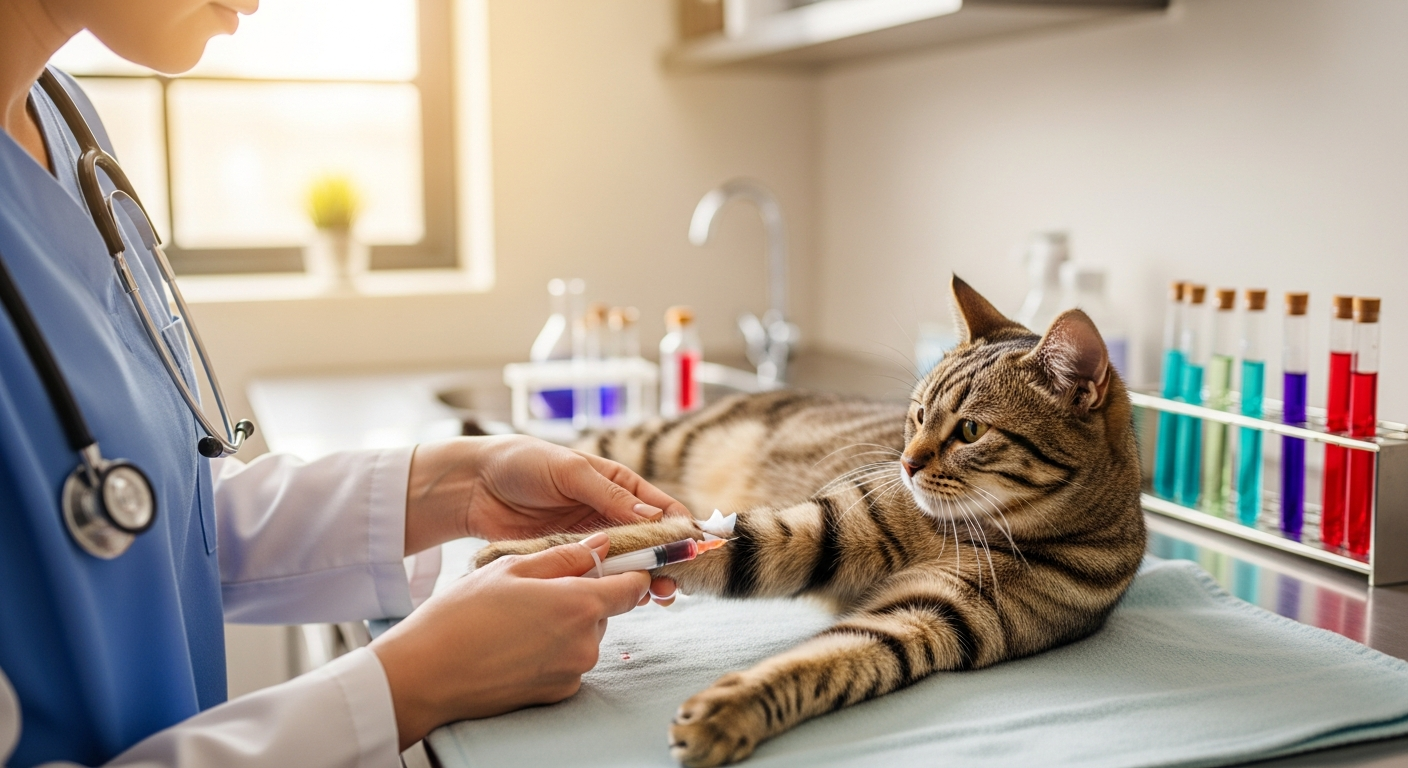
Here is the uncomfortable arithmetic at the center of preventive pet medicine: in cats, chronic kidney disease is usually not detectable on standard bloodwork until about 75% of kidney function has already been lost [1]. By the time the classic signs appear — increased thirst, weight loss, vomiting — the disease is typically at IRIS Stage 3 or 4, and three-quarters of the organ is gone.
That single fact reframes how we should think about pet health. The absence of symptoms is not the same as the absence of disease. Many of the conditions that shorten pets' lives are silent for months or years, doing damage the whole time. Early screening is the only way to see them coming — and, increasingly, catching them early changes the outcome. This guide explains why, using kidney disease as the clearest example, and what screening actually looks like.
Symptoms are a late warning system
Pets are hardwired to hide illness. In the wild, showing weakness is dangerous, and domestication hasn't erased that instinct. A dog or cat will often carry on eating, playing and seeming "fine" well into the course of a serious disease. Owners aren't missing obvious signs — for much of the disease, there are no signs to miss.
This is compounded by how many diseases progress. Kidney disease, liver disease, many cancers, endocrine disorders like hyperthyroidism and Cushing's, and heart disease all develop gradually. The body compensates, masking the problem, until compensation fails — and then symptoms appear suddenly, giving the false impression of a disease that "came out of nowhere." It didn't. It was there all along, below the threshold of what you could see.
The kidney disease example — and why SDMA changed the game
Feline chronic kidney disease (CKD) is the textbook case, because the numbers are so stark.
For decades, the main blood marker for kidney function was creatinine. The problem is that creatinine doesn't rise above the normal range until roughly 75% of nephrons — the kidney's filtering units — are already lost [1]. It is a late marker by design. So a cat could have substantial, irreversible kidney damage and still have "normal" bloodwork.
A newer biomarker, SDMA (symmetric dimethylarginine), shifted that line dramatically. SDMA can flag declining kidney function at around 25–40% loss — potentially years earlier than creatinine [1][2]. That is the difference between finding CKD at Stage 1, when diet and management can meaningfully slow it, and finding it at Stage 4, when options are limited. Cats diagnosed at IRIS Stage 1 or early Stage 2 have significantly longer survival than those caught late [3].
But — and this is the whole point — SDMA only helps if the screening actually happens. A better test that never gets run changes nothing. The marker exists; the gap is that many cats are never screened until they're already symptomatic. Early detection is a behavior, not just a technology.
Screening works across many diseases, not just kidneys
Kidney disease is the clearest illustration, but the principle generalizes. A complete minimum-database screen — complete blood count (CBC), biochemistry panel, and urinalysis, with life-stage-appropriate additions — enables early detection of kidney, hepatic, endocrine and hematologic disease before clinical signs appear [4]. For cats aged seven and older, a thyroid (T4) check catches hyperthyroidism early. For senior and predisposed dogs, adding SDMA and other markers does the same for kidney function.
The American Animal Hospital Association and American Association of Feline Practitioners both recommend regular wellness screening, with at least annual exams for adults and twice-yearly (semi-annual) exams for seniors, because pets age faster than we do and a lot changes in a "pet year" [4][5]. A twelve-month gap in a senior cat can span the entire silent phase of a disease.
The behavior gap: the care that prevents early death gets skipped
If early screening works, why don't more pets get it? Because owners routinely decline exactly the preventive care that would catch disease early.
A 2024 Gallup / PetSmart Charities study found that 52% of U.S. pet owners skipped or declined needed veterinary care in the previous year, and that the most-declined services were the preventive ones — diagnostic blood tests (declined by 22%) and annual exams or vaccinations (18%) [6]. Most sobering: 14% of owners who skipped care said their pet's condition worsened or the pet died [6]. The leading reason was cost.
This is the real bottleneck in pet longevity. It isn't that we lack the tools — it's that the everyday, unglamorous preventive steps get postponed, and postponement is where silent diseases win. The tests that feel skippable because the pet seems fine are precisely the ones designed to find disease while the pet still seems fine.
Building an early-detection routine
The evidence points to a straightforward, life-stage-based plan.
For adult dogs and cats (roughly 1–7 years), an annual wellness exam with baseline bloodwork establishes what "normal" looks like for your individual pet — which makes future changes far easier to spot. For senior pets (from about 7 years, earlier for large and giant breeds), move to twice-yearly exams and annual (or more frequent) screening including CBC, biochemistry, urinalysis, and species-appropriate markers such as SDMA and, in cats, T4 [4][5].
The most valuable data is trend data. A creatinine or SDMA value that is still technically "normal" but has climbed steadily across three annual screens is an early signal that a single snapshot would miss entirely. This is why consistency matters more than any one test: the power of screening compounds when you can compare a value to your pet's own history rather than only to a population reference range.
The bottom line
Waiting for symptoms is, in effect, waiting for the disease to become advanced. For the conditions that most often shorten pets' lives, the symptomatic stage is the late stage. Early screening — the right tests, at the right life stage, done consistently and tracked over time — is how you move detection upstream to where intervention still works. It is not an upsell. It is the mechanism by which preventive medicine actually prevents.
Frequently asked questions
What does a high SDMA mean in my cat? A raised SDMA (symmetric dimethylarginine) suggests the kidneys are filtering less efficiently — and it can flag that decline early, at around 25–40% loss of function, well before creatinine rises or symptoms appear [1][2]. A single high reading isn't a diagnosis on its own; your vet will usually recheck it, alongside creatinine, urine concentration and blood pressure, to confirm and stage any kidney disease. Catching it early is genuinely good news, because early-stage disease is where management does the most [3].
What is a normal SDMA level, and can a high one come back down? Reference ranges are set by the laboratory, and your vet interprets the number against your individual cat's history rather than a single cutoff. An elevated SDMA can sometimes return to normal if it was caused by a temporary issue (such as dehydration), which is exactly why vets recheck rather than diagnose on one result. Persistent elevation points to reduced kidney function that should be staged and managed.
What are the early signs of kidney disease in cats? The hard truth is that the early stages usually have no visible signs — that's the whole problem. By the time you see increased thirst, increased urination, weight loss or vomiting, the disease is often advanced (IRIS Stage 3–4) [1]. This is why screening bloodwork, not symptom-watching, is what catches it in time.
How often should my cat or dog have bloodwork? Adults benefit from annual wellness bloodwork to establish a baseline; seniors (cats and dogs from about age 7, earlier for large breeds) should move to twice-yearly exams with annual or more frequent screening [4][5]. The real value is the trend — a value that's still "normal" but rising across years is a signal a single test misses.
Is wellness screening worth the cost if my pet seems healthy? For the diseases that most often shorten pets' lives, "seems healthy" is precisely the window screening is designed for — the symptomatic stage is the late stage. A 2024 study found the most-declined veterinary services were preventive ones, and 14% of owners who skipped care said their pet worsened or died [6].
Never miss a screening with Stay
Stay tracks your pet's screening history and biomarker trends over time, flags when life-stage-appropriate testing is due, and shows you how early-detection habits move your dog or cat's longevity score. Because a value that's "normal but rising" is exactly what a single test misses. Join the Stay waitlist.
Important note
This article is decision-support information, not veterinary advice. It does not diagnose disease or recommend specific tests for your individual pet. Your veterinarian will advise which screening is appropriate based on your pet's age, breed and history.
References
- International Renal Interest Society. IRIS Staging of CKD. https://www.iris-kidney.com/iris-staging-system
- Veterinary Ireland Journal. Diagnosing and staging early chronic kidney disease in cats. https://www.veterinaryirelandjournal.com/small-animal/411-diagnosing-and-staging-early-chronic-kidney-disease-in-cats
- Boyd LM, et al. Survival in cats with naturally occurring chronic kidney disease by IRIS stage. J Vet Intern Med. 2008;22(5):1111–1117.
- American Animal Hospital Association. 2019 AAHA Canine Life Stage Guidelines; Feline Life Stage Guidelines. https://www.aaha.org/aaha-guidelines/
- American Association of Feline Practitioners. Senior Care Guidelines. https://catvets.com/guidelines/practice-guidelines
- Gallup / PetSmart Charities. Pet Owners Have Skipped or Declined Veterinary Care. 2024. https://news.gallup.com/poll/659057/pet-owners-skipped-declined-veterinary-care.aspx