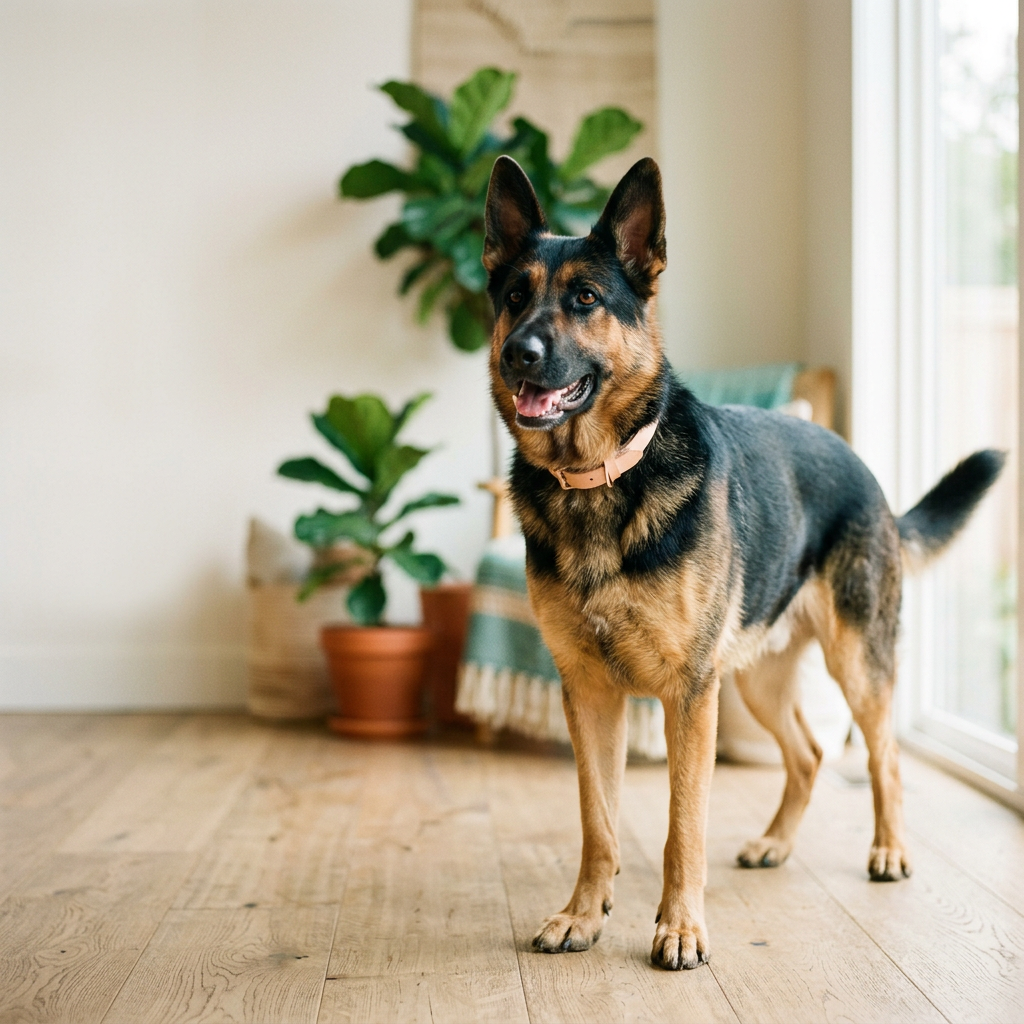
The German Shepherd is one of the UAE's most popular dogs — loyal, intelligent, and endlessly capable. They're also a breed with a well-documented set of health predispositions, which is good news for an owner who plans ahead: when you know what a breed is prone to, you can screen for it early and often prevent or delay it. This guide covers the conditions that matter most for German Shepherds, the preventive steps that work, and the extra care their coat and working drive demand in Dubai's heat.
Typical lifespan is around 9–13 years, and thoughtful preventive care sits at the upper end of that range.
Joints: hip and elbow dysplasia
German Shepherds are strongly associated with hip and elbow dysplasia — malformed joints that lead to arthritis and pain, sometimes from a young age [1]. It's partly genetic, so buying from a breeder who screens hips and elbows (OFA or equivalent) matters. For any Shepherd, the protective levers are the same and powerful: keep them lean (excess weight dramatically worsens joint disease — see the body-condition test), provide regular moderate exercise rather than weekend extremes, avoid over-exercising growing puppies, and raise concerns about stiffness or limping early.
The spine: degenerative myelopathy
Degenerative myelopathy (DM) is a progressive, ultimately paralysing disease of the spinal cord that the breed is predisposed to, usually appearing in older dogs. There's a DNA test for the associated SOD1 gene that tells you a dog's risk status [2]. It isn't preventable, but early awareness helps you distinguish it from treatable causes of hind-limb weakness (like arthritis or a disc problem) and plan supportive care and physiotherapy that preserve quality of life.
The emergency to know: bloat (GDV)
As a deep-chested breed, German Shepherds are at raised risk of gastric dilatation-volvulus (bloat) — where the stomach fills with gas and twists, a rapidly fatal emergency needing surgery within hours [3]. Every Shepherd owner should know the signs: a swollen, hard belly, unproductive retching, restlessness and drooling — and treat them as a go-now emergency (see pet emergency red flags). Feeding smaller meals, avoiding heavy exercise right after eating, and discussing preventive stomach-tacking (gastropexy) with your vet — often done at neutering — all reduce risk.
Other conditions to watch
- Exocrine pancreatic insufficiency (EPI) — the pancreas fails to produce digestive enzymes, causing weight loss despite a big appetite and loose, pale stools; very treatable once diagnosed.
- Haemangiosarcoma and other cancers — a reason not to dismiss vague signs in an older Shepherd.
- Allergies and skin/ear problems, and anal furunculosis, occur more in the breed.
- Chronic degenerative valve and heart conditions in older age.
Life-stage screening priorities
German Shepherds reward a proactive plan: confirm hip/elbow status and consider the DM DNA test; keep weight lean lifelong; from around age seven move to twice-yearly veterinary exams with screening bloodwork to catch organ and endocrine disease early; and stay alert to the bloat signs at any age. Good dental care and core preventive habits apply as they do to every dog.
Caring for a German Shepherd in the UAE heat
Shepherds have a double coat and a strong working drive — a combination that makes them vulnerable to overheating if exercised in the heat. Don't shave the double coat (it insulates against heat as well as cold and protects skin); instead, manage the environment: exercise in the cool of early morning and late evening, never on scorching pavement (use the 7-second test), provide constant shade, water and air-conditioning, and watch closely for heat stroke, because a driven dog will push past its limits to keep working or playing. Regular brushing manages the heavy seasonal shed.
The bottom line
The German Shepherd's main health risks — hip and elbow dysplasia, degenerative myelopathy, and bloat — are exactly the kind you get ahead of by choosing a screened breeder, keeping the dog lean, learning the emergency signs, and screening early as they age. Pair that with heat-smart care for their coat and drive, and you give this remarkable breed the best shot at a long, comfortable life.
Frequently asked questions
What health problems are German Shepherds prone to? Most notably hip and elbow dysplasia, degenerative myelopathy (a progressive spinal-cord disease), and bloat (a deep-chested-breed emergency). They're also more prone to exocrine pancreatic insufficiency, certain cancers, and skin, ear and allergy issues [1][2][3].
How long do German Shepherds live? Typically around 9–13 years. Keeping them lean, screening joints and organs, knowing the signs of bloat, and heat-smart care all help them reach the upper end of that range.
Should I be worried about bloat with my German Shepherd? It's a real, breed-relevant risk worth respecting, not fearing. Learn the signs (swollen hard belly, unproductive retching, restlessness), feed smaller meals, avoid hard exercise right after eating, and ask your vet about a preventive gastropexy — often done at neutering.
Is it safe to exercise my German Shepherd in Dubai's summer? Only in the cool of early morning and evening, off hot pavement, with shade and water — and watch closely, because their working drive means they'll overexert in heat. Don't shave the double coat; manage the environment instead.
Give your German Shepherd a longevity plan with Stay
Stay tailors a preventive-care and screening plan to your German Shepherd's breed-specific risks, tracks weight and joint health, and flags heat-season dangers — so you catch problems early and add good years. AI assists; experts decide. Join the Stay waitlist.
Important note
This article is decision-support information, not veterinary advice, and does not diagnose your individual pet. Breed predispositions are tendencies, not certainties; your veterinarian will advise on your individual dog.
References
- Orthopedic Foundation for Animals (OFA) / Canine Health Information Center. Breed statistics: German Shepherd Dog. https://www.ofa.org/
- American Kennel Club Canine Health Foundation. Degenerative myelopathy and SOD1 testing. https://www.akcchf.org/
- American College of Veterinary Surgeons. Gastric dilatation-volvulus (bloat). https://www.acvs.org/small-animal/gastric-dilatation-volvulus