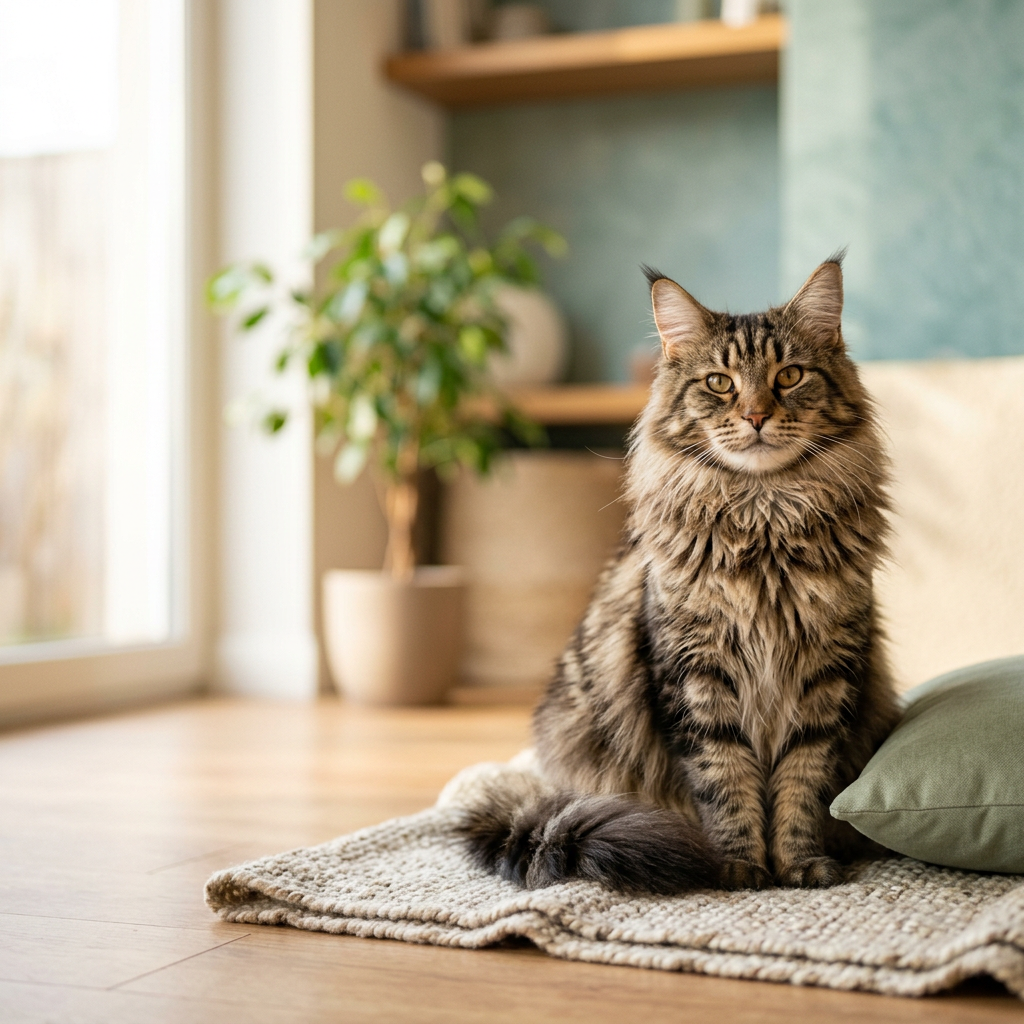
The Maine Coon is the friendly giant of the cat world — large, sociable, and increasingly popular across the UAE. Their impressive size is part of their charm, but it also shapes their health profile in ways smaller cats don't share, and the breed carries one inherited heart condition that every owner should have on their radar (there's a DNA test for it). Knowing the risks lets you screen early and give this affectionate breed a long, comfortable life. Here's what to know.
Typical lifespan is around 12–15 years, with good screening and care supporting the upper end.
The signature risk: hypertrophic cardiomyopathy (HCM)
HCM — a thickening of the heart muscle — is the most important health concern in Maine Coons, and the breed was central to identifying a specific genetic cause: a mutation in the MYBPC3 gene, for which a DNA test exists [1]. HCM can be silent until it's advanced, sometimes first appearing as sudden breathing difficulty or a clot causing hind-limb paralysis — both emergencies. What to do: ask whether breeding cats were DNA-tested and heart-scanned, discuss periodic echocardiography with your vet, and learn your cat's normal resting breathing rate so a rise is caught early. (A negative DNA test lowers but doesn't eliminate risk, since other mutations exist — so screening still matters.)
A big-cat problem: hip dysplasia
Unusually for a cat, the Maine Coon's size makes it prone to hip dysplasia — a malformed hip joint that causes arthritis and can reduce mobility, jumping and activity as they age [2]. Keeping your Maine Coon lean is the single best protection, alongside providing easy-access resting and litter spots for older or affected cats, and raising any stiffness or reduced jumping with your vet.
The muscles: spinal muscular atrophy (SMA)
Maine Coons can carry spinal muscular atrophy, an inherited condition affecting the nerves that control muscles, causing weakness and an unsteady gait, usually appearing in young cats [3]. It's not painful or life-threatening, but affected cats need a safe, adapted home. A DNA test allows breeders to avoid producing affected kittens.
Other conditions to watch
- Polycystic kidney disease (PKD) — occurs in the breed; screen kidney health as they age.
- Dental disease — as in all cats, prevent with dental care.
- Obesity — a genuinely large cat still shouldn't be a fat one; know the difference between big and overweight with the body-condition test.
Life-stage and preventive priorities
Confirm HCM (MYBPC3) and SMA DNA testing and heart screening in the parents; keep your Maine Coon lean to protect the hips and heart; provide senior-friendly access to litter and resting spots; prioritise dental care; and screen the heart and kidneys as they age — annual exams for adults, twice-yearly for seniors, with the core preventive levers throughout.
Caring for a Maine Coon in the UAE
That thick, water-resistant coat evolved for cold Maine winters, so Maine Coons feel the heat: keep them in air-conditioned comfort with abundant fresh water through the hot months, and brush a few times a week (their semi-long coat mats less than a Persian's but still needs help, especially the "trousers" and belly). As big, playful, people-oriented cats, they thrive with climbing space and interaction — good for keeping a large cat lean and engaged.
The bottom line
The Maine Coon's health story follows its size: a heart condition (HCM) worth screening for with a breed DNA test, hip dysplasia that a lean weight protects against, and a muscle condition (SMA) to know about. Handle those through screened breeding, weight management and regular heart and kidney checks, add heat-smart care for that heavy coat, and this gentle giant can enjoy a long, active life.
Frequently asked questions
What health problems are Maine Coons prone to? Most importantly hypertrophic cardiomyopathy (HCM, with a MYBPC3 DNA test), plus hip dysplasia (unusual in cats, linked to their size), spinal muscular atrophy (SMA), and polycystic kidney disease. Dental disease and obesity also matter [1][2][3].
How long do Maine Coons live? Typically around 12–15 years. Heart and kidney screening, a lean weight to protect the hips, and good dental and heat-smart care support a long, healthy life.
Should my Maine Coon be tested for HCM? Yes — it's the breed's signature risk. Reputable breeders DNA-test (MYBPC3) and heart-scan their cats, and periodic echocardiography is often recommended. Because other HCM mutations exist, a negative DNA test lowers but doesn't remove the need for heart screening.
Is my Maine Coon overweight or just big? Maine Coons are genuinely large, but big isn't the same as fat. Use the body-condition test — you should be able to feel the ribs easily under a light covering and see a waist. Keeping a large cat lean is the best protection for its hips and heart.
Care for your gentle giant with Stay
Stay tailors heart- and kidney-screening reminders to the Maine Coon's breed risks, tracks weight to protect the hips, and keeps a big cat healthy and active. AI assists; experts decide. Join the Stay waitlist.
Important note
This article is decision-support information, not veterinary advice, and does not diagnose your individual pet. Breed predispositions are tendencies, not certainties; your veterinarian will advise on your individual cat.
References
- Meurs KM, et al. A cardiac myosin binding protein C mutation in the Maine Coon cat with familial hypertrophic cardiomyopathy. Human Molecular Genetics. 2005;14(23):3587–3593.
- Orthopedic Foundation for Animals. Feline hip dysplasia — breed statistics. https://www.ofa.org/
- Merck Veterinary Manual (MSD) / International Cat Care. Spinal muscular atrophy and inherited feline disorders. https://icatcare.org/