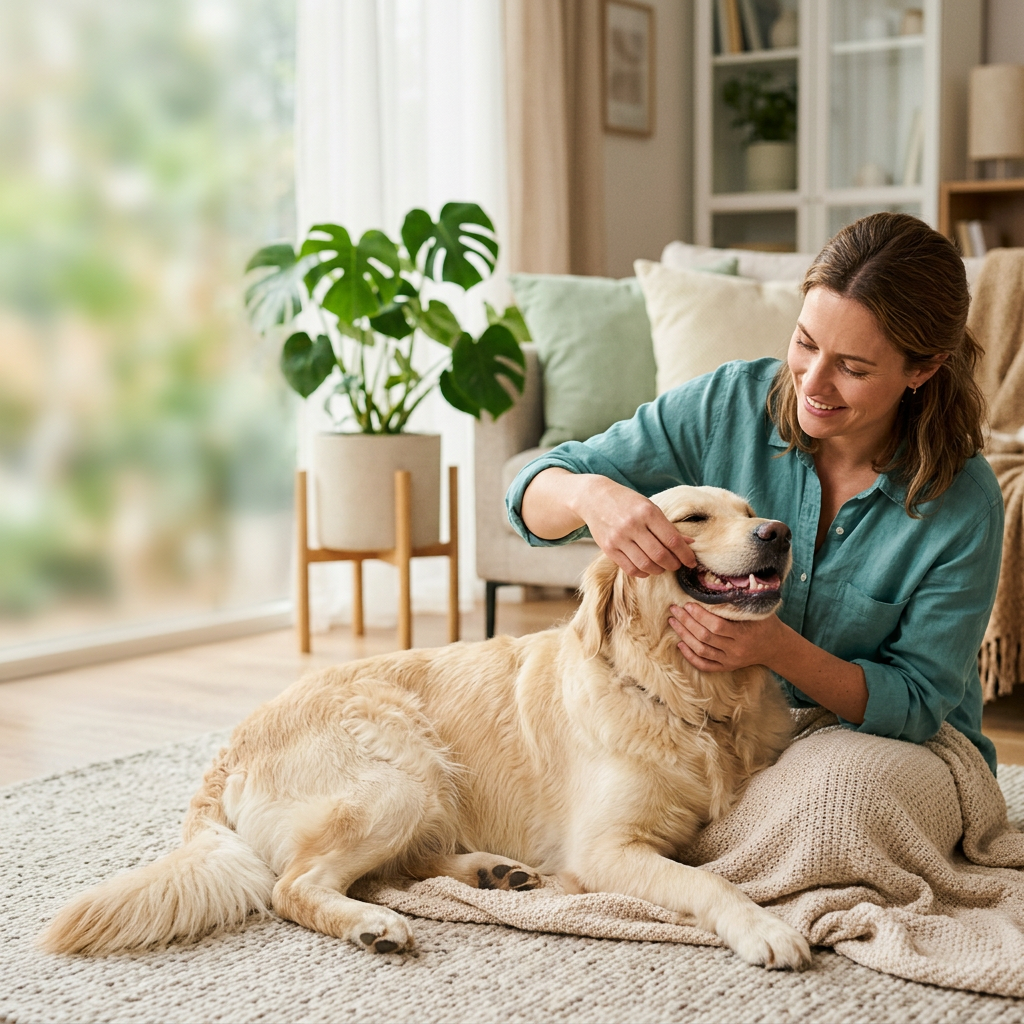
The people best placed to catch a pet's health problem early aren't vets — they're owners, because you see your pet every single day. The catch is knowing what to look at. A short, regular nose-to-tail check turns vague familiarity ("she seems a bit off") into specific observations your vet can actually use, and helps you tell a "monitor at home" from a "book a visit." Here's a simple routine you can run in about five minutes, once a week, in your normal cuddle time.
None of this replaces veterinary care or a professional exam — it makes you a sharper early-warning system between them.
1. Gums: colour and moisture
Gently lift your pet's lip. Healthy gums are bubble-gum pink and moist [1]. Learn your pet's normal, because it's one of the most useful signs you have:
- Pale or white — possible blood loss, shock or anaemia
- Blue or grey — an oxygen emergency; seek care now
- Brick-red — possible overheating or circulatory problem
- Yellow — possible jaundice (liver problem)
- Very dry or tacky — possible dehydration
You can also check capillary refill: press a finger on the gum, lift it, and the blanched spot should return to pink in under two seconds. (Note: some pets naturally have pigmented, dark gums — find a pink area, or learn their normal.)
2. Breathing rate at rest
Count breaths (one rise and fall of the chest = one breath) while your pet is relaxed or asleep — not after exercise or in the heat. A normal resting respiratory rate is roughly under 30 breaths per minute for most dogs and cats [2]. A resting rate that's consistently higher, or laboured, is an important early sign of heart or lung problems and is well worth a vet visit. Tracking it over time is genuinely valuable — vets often ask owners to monitor sleeping breathing rate in pets with heart conditions.
3. Hydration
Gently lift the skin over the shoulders and let go: in a well-hydrated pet it springs back quickly. If it's slow to flatten ("tents"), your pet may be dehydrated. Combine this with the gum check (dry, tacky gums) for a fuller picture. Dehydration alongside vomiting, diarrhoea or reduced drinking is a reason to call your vet.
4. Weight and body condition
Run your hands over the ribs: you should be able to feel the ribs easily under a thin layer, without pressing, and see a waist tucking in behind the ribs from above. Too hard to feel means overweight; sharply visible means underweight. Because weight changes slowly, a monthly hands-on check catches drift the bathroom scale of "he looks the same" misses — and weight is one of the biggest levers on a pet's healthy lifespan (see is my pet overweight? the body-condition test).
5. Everyday behaviour, appetite and toileting
Finally, notice the ordinary things, because changes here are often the earliest clue of all:
- Appetite and thirst — eating less, or suddenly drinking much more (see why is my dog drinking so much?)
- Energy and mood — new lethargy, hiding, restlessness or irritability
- Toileting — straining, accidents, changes in the litter tray, blood
- Movement — stiffness, limping, reluctance on stairs
- Coat and skin — new lumps, itching, hair loss (log any lump's size and a photo)
Turning a check into action
The point of the routine isn't to diagnose — it's to notice change early and know what to do with it. A single odd reading in an otherwise bright pet is usually a "watch." A red gum colour, laboured breathing, a tenting skin fold with other signs, or several changes together is a "call the vet." When you're unsure, a symptom checker helps you judge the urgency — and a written note of what you saw makes any vet visit far more useful.
The bottom line
Five minutes a week — gums, resting breaths, hydration, body condition and everyday behaviour — turns you into the early-warning system your pet's health depends on. You don't need to be a vet; you need to know your pet's normal, and to notice when it shifts. Catching change early is exactly where preventive care does its best work.
Frequently asked questions
What colour should my dog's or cat's gums be? Healthy gums are bubble-gum pink and moist, and blanched gum colour should return within about two seconds after you press [1]. Pale/white, blue/grey, brick-red or yellow gums are warning signs — blue or grey means seek care immediately. Some pets have naturally dark, pigmented gums, so find a pink area and learn their normal.
What's a normal breathing rate for a dog or cat? At rest or asleep, most dogs and cats breathe under about 30 times per minute [2]. Count while your pet is relaxed, not after exercise or in heat. A consistently higher resting rate, or laboured breathing, warrants a vet check — it can be an early sign of heart or lung disease.
How can I tell if my pet is dehydrated at home? Gently lift the skin over the shoulders; it should spring back quickly. Slow return ("tenting"), together with dry or tacky gums, suggests dehydration. With vomiting, diarrhoea or reduced drinking, contact your vet.
How often should I do a home health check? A quick gum/breathing/behaviour check weekly, and a hands-on weight and lump check monthly, works well for most pets. It complements — never replaces — regular veterinary exams and life-stage screening.
Make it a habit with Stay
Stay gives you a simple home-check log — gum colour, resting breathing rate, weight, lumps and behaviour — tracks the trends, and flags when a change is worth a vet visit or a screening test. AI assists; experts decide. Join the Stay waitlist.
Important note
This article is decision-support information, not veterinary advice, and does not diagnose your individual pet. A home check complements but does not replace professional veterinary examinations.
References
- American Veterinary Medical Association. Basic pet first aid and assessing your pet. https://www.avma.org/
- American College of Veterinary Internal Medicine (ACVIM). Resting/sleeping respiratory rate monitoring in dogs and cats. https://www.acvim.org/
- American Animal Hospital Association. Preventive care and life-stage guidelines. https://www.aaha.org/aaha-guidelines/