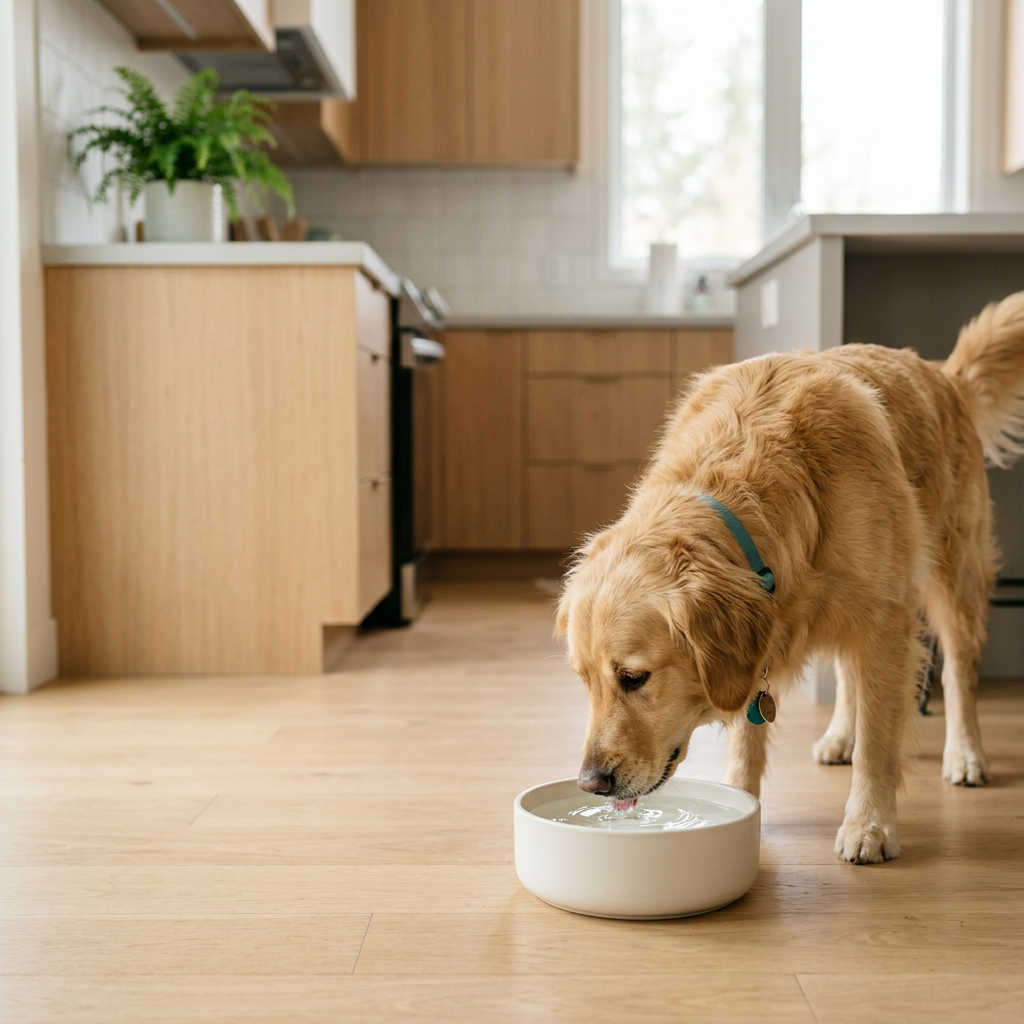
A sudden increase in how much your dog drinks — and, close behind it, how much they urinate — is one of the most useful early warning signs in all of pet health. It's easy to dismiss ("it's hot, she's thirsty"), but a genuine, sustained change in thirst is often the first visible clue of a disease that has been developing quietly for weeks or months. Vets call it polydipsia (increased drinking) and polyuria (increased urination); together, PU/PD.
Here's what's normal, what isn't, and when the water bowl is telling you to book a vet visit.
How much water is normal?
As a rough guide, a healthy dog drinks up to about 50–60 ml of water per kilogram of body weight per day, and sustained intake above roughly 100 ml/kg/day is considered abnormal [1]. For a 20 kg dog, that upper threshold is about 2 litres a day.
But you don't need to measure millilitres to spot a problem. What matters most is change: a dog that used to leave water in the bowl and now drains it, empties it overnight, seeks out other water sources, or suddenly needs to go out in the night or has accidents indoors. Trust the shift from your dog's own normal — that's the real signal.
The causes that matter
Increased thirst is a symptom, not a diagnosis, and the possible causes range from minor to serious. The ones vets most want to catch early include:
- Chronic kidney disease. As the kidneys lose their ability to concentrate urine, dogs urinate more and drink more to keep up. Increased thirst can appear before other signs — which is exactly why it's worth acting on [1].
- Diabetes mellitus. Excess blood sugar spills into the urine and pulls water with it, causing marked thirst and urination, often with a bigger appetite but weight loss. Early treatment matters a great deal.
- Cushing's disease (hyperadrenocortism). Overproduction of cortisol classically causes increased drinking, urination and appetite, often with a pot-bellied appearance, panting and thinning coat.
- Urinary tract infection. More common as a cause of frequent, urgent, or painful urination, sometimes with increased drinking.
- Other causes. Liver disease, high blood calcium, pyometra (a womb infection in unspayed females — a genuine emergency), and certain medications (like steroids) also drive PU/PD.
The pattern across this list is important: several of these are silent, serious and very treatable when caught early — the definition of a symptom worth taking seriously.
When to see a vet
Book a veterinary appointment if your dog's drinking or urinating has clearly and consistently increased over more than a day or two, especially alongside any of these:
- Weight loss, or a bigger appetite with weight loss
- Drinking or urinating much more, plus lethargy or vomiting
- Accidents indoors or waking you to go out at night, in a previously reliable dog
- An unspayed female who is drinking more and seems unwell (possible pyometra — see a vet urgently)
A simple, quick step helps your vet enormously: collect a fresh urine sample in a clean container the morning of your visit if you can. A urine test plus blood work is usually all it takes to point to the cause — and most of these conditions are managed far better when found early. This is the same principle behind why early screening saves pets: the symptomatic stage is usually the late stage, so acting on the first clue counts.
The bottom line
An empty water bowl isn't always innocent. A real, sustained rise in how much your dog drinks and pees is one of the body's clearest early signals — and behind it can sit kidney disease, diabetes or Cushing's, all of which reward early action. If the change is genuine and lasting, don't wait it out: a urine sample and a vet visit turn a vague worry into a clear answer.
Frequently asked questions
How much water should a dog drink per day? Roughly 50–60 ml per kilogram of body weight is typical, and sustained intake over about 100 ml/kg/day is considered abnormal [1]. More useful than the exact number is the change from your dog's own normal — a dog that suddenly drains the bowl or seeks extra water is worth noticing.
My dog is drinking a lot but seems fine otherwise — should I worry? A brief increase after heat, exercise or a salty meal can be normal. But a genuine increase that lasts more than a day or two — even in a dog that otherwise seems well — is worth a vet visit, because kidney disease, diabetes and Cushing's often cause increased thirst before the dog looks unwell.
What does it mean if my dog is drinking and peeing more at night? Needing to urinate overnight, or accidents in a previously house-trained dog, often reflects genuinely increased urine production rather than a behaviour problem. It's a common early sign of kidney disease, diabetes and Cushing's and should be checked.
Could increased thirst just be the Dubai heat? Hot weather and exercise do raise water needs temporarily. But heat shouldn't cause a permanent step-change in drinking, and it doesn't explain accompanying signs like weight loss, a ravenous appetite or night-time urination. If in doubt, get it checked.
Catch the early signals with Stay
Stay helps you track everyday changes — thirst, appetite, weight, toileting — and flags when a pattern is worth a vet visit or a screening test, so quiet early signs don't get explained away. AI assists; experts decide. Join the Stay waitlist.
Important note
This article is decision-support information, not veterinary advice, and does not diagnose your individual pet. Increased thirst has several possible causes; your veterinarian will identify the right one with an exam and simple tests.
References
- Merck Veterinary Manual (MSD). Polyuria and Polydipsia in Small Animals. https://www.merckvetmanual.com/
- American Animal Hospital Association. Diagnostic and wellness screening guidance. https://www.aaha.org/aaha-guidelines/
- International Renal Interest Society. IRIS Staging of CKD. https://www.iris-kidney.com/iris-staging-system