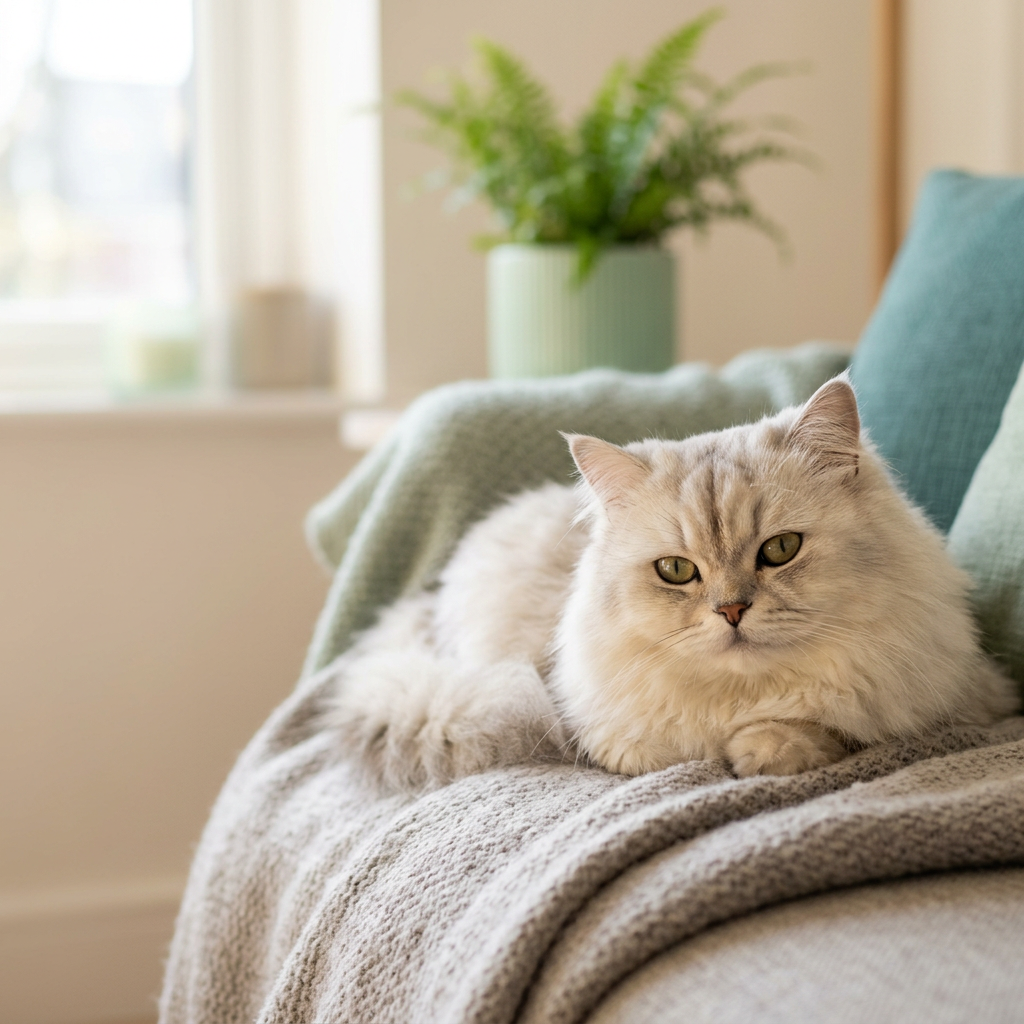
With their luxurious coats and serene natures, Persians are the UAE's most beloved cat breed. They're also a breed shaped by their distinctive looks in ways that affect health — the flat face and long coat both come with care needs — plus an inherited kidney disease that every Persian owner should know about because there's a simple way to screen for it. Understanding these risks lets you get ahead of them and keep your Persian comfortable and thriving.
Typical lifespan is around 12–17 years, and attentive daily care makes a real difference to those years.
The inherited one: polycystic kidney disease (PKD)
Persians (and related breeds) have historically had a high rate of polycystic kidney disease — fluid-filled cysts that grow in the kidneys over time and can lead to kidney failure, often in middle age [1]. The good news: there's a DNA test, so responsible breeders now screen and the prevalence is falling. If you have a Persian, ask whether the parents were PKD-tested, and talk to your vet about monitoring kidney health — because kidney disease is silent until late, and Persians benefit especially from the early screening that catches it while management still helps most.
The flat face: breathing, eyes and teeth
Persians are brachycephalic (flat-faced), which brings several linked issues [2]:
- Breathing — narrowed nasal passages can cause noisy breathing and reduced heat tolerance (more on heat below).
- Tear overflow — the shortened face disrupts tear drainage, causing the classic wet, stained fur below the eyes; wipe the folds daily to prevent skin infection.
- Eye conditions — prominent eyes are prone to irritation and ulcers; any squinting or cloudiness needs prompt care.
- Dental crowding — a compressed jaw crowds the teeth, raising dental-disease risk, so brushing and veterinary dental care matter.
The coat: daily grooming is non-negotiable
A Persian's long, dense coat cannot be maintained by the cat alone — it mats painfully without help. Daily brushing is essential to prevent tangles, skin problems and hairballs, along with routine bathing and, for many, a hygienic trim. In the UAE's heat, a professional "lion cut" in summer can help some Persians stay comfortable (discuss with your groomer/vet). Regular grooming is also a perfect moment to check skin, weight and any lumps.
Other conditions to watch
- Hypertrophic cardiomyopathy (HCM) — the most common feline heart disease can affect Persians; a heart check and, where appropriate, a scan help detect it.
- Progressive retinal atrophy and other inherited eye conditions in some lines.
- Hairballs — frequent in long-haired cats; frequent brushing and vet advice on diet help, but persistent vomiting still deserves a check (see cat vomiting: when to worry).
- Dystocia — flat-faced queens often struggle to give birth naturally.
Life-stage and preventive priorities
Confirm PKD (and ideally HCM) testing in the parents; brush daily and keep eye folds clean; prioritise dental care; keep your Persian lean and indoor-safe; and lean into regular screening as they age (kidney and heart especially) — annual for adults, twice-yearly for seniors. See the core preventive levers.
Caring for a Persian in the UAE heat
The flat face means Persians tolerate heat less well than many cats, and the dense coat adds to the load. Keep them in air-conditioned comfort through the hot months, always with fresh water and cool, shaded resting spots, and never leave a Persian in a hot room or car. Watch for open-mouth breathing or lethargy in heat and treat it seriously. A summer coat trim and diligent grooming both help them cope.
The bottom line
A Persian's beauty is inseparable from its care needs: the flat face calls for eye, dental and heat attention, the coat demands daily grooming, and the breed's inherited kidney disease makes early screening genuinely important. None of it is difficult once it's routine — and together it keeps this gentle, elegant cat healthy and comfortable well into its teens.
Frequently asked questions
What health problems are Persian cats prone to? Polycystic kidney disease (inherited, with a DNA test available), flat-face-related breathing, tear-overflow and eye problems, dental crowding, heart disease (HCM), and coat matting if not groomed daily [1][2]. Most are manageable with screening and good routine care.
How long do Persian cats live? Typically around 12–17 years. Early kidney and heart screening, daily grooming, dental care and heat-smart living all support a long, comfortable life.
Why does my Persian cat have wet, stained fur under its eyes? The flat face disrupts normal tear drainage, so tears overflow onto the fur, causing staining and, if left, skin irritation. Wipe the eye folds gently every day, and have any squinting, redness or cloudiness checked, as the prominent eyes are prone to ulcers.
How often should I groom a Persian cat? Daily. Their long, dense coat mats painfully without regular brushing, which can't be managed by the cat alone. Add routine bathing and, especially in the UAE summer, consider a hygienic or "lion" trim to keep them comfortable.
Care for your Persian with Stay
Stay tailors screening reminders to the Persian's kidney and heart risks, tracks weight, dental and grooming health, and flags heat-season care — so inherited and silent conditions are caught early. AI assists; experts decide. Join the Stay waitlist.
Important note
This article is decision-support information, not veterinary advice, and does not diagnose your individual pet. Breed predispositions are tendencies, not certainties; your veterinarian will advise on your individual cat.
References
- International Cat Care / Langston C. Polycystic kidney disease in cats. https://icatcare.org/
- American Association of Feline Practitioners. Brachycephalic cats and breed-related health. https://catvets.com/guidelines/practice-guidelines
- Merck Veterinary Manual (MSD). Inherited and breed-related disorders in cats. https://www.merckvetmanual.com/