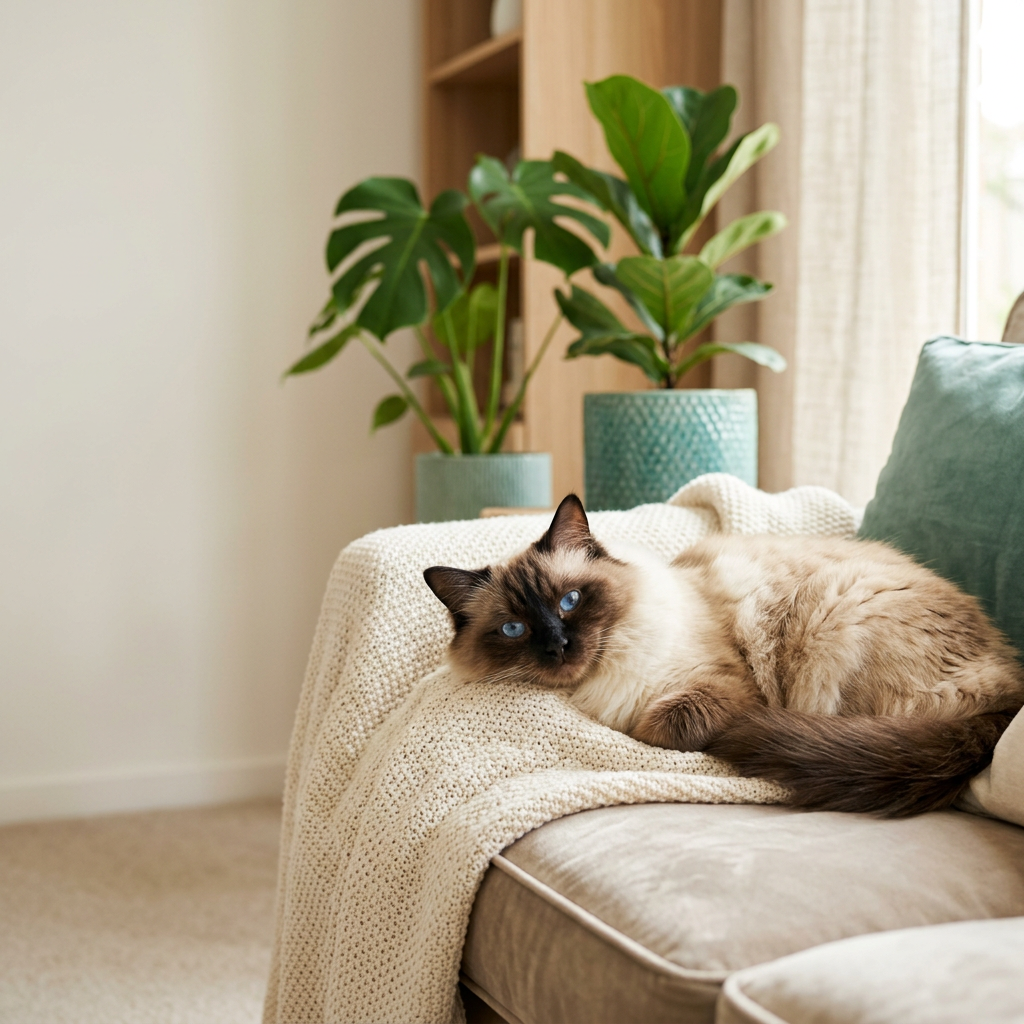
Ragdolls are the ultimate lap cat — large, docile, and so relaxed they famously go limp when you pick them up. That gentle, low-energy temperament is exactly why people adore them across the UAE, and it also shapes their health needs in two ways: a calm cat is easy to accidentally overfeed and under-exercise, and the breed carries an inherited heart condition worth screening for. Both are very manageable once you know. Here's the Ragdoll playbook.
Typical lifespan is around 12–15 years, and a lean, well-screened Ragdoll does best.
The inherited risk: hypertrophic cardiomyopathy (HCM)
Like several pedigree breeds, Ragdolls are predisposed to HCM, a thickening of the heart muscle — and the breed has its own identified genetic mutation (a Ragdoll-specific MYBPC3 R820W variant) with a DNA test available [1]. HCM can be silent until advanced, occasionally first appearing as sudden breathing difficulty or a clot causing hind-limb paralysis — both emergencies. What to do: ask whether breeding cats were DNA-tested and heart-scanned, discuss periodic echocardiography with your vet, and learn your cat's normal resting breathing rate as an early-warning habit. A negative DNA test lowers risk but doesn't remove the value of heart screening, since other HCM causes exist.
The everyday risk: weight (a calm cat's hazard)
Ragdolls are big, laid-back and not naturally energetic, which makes weight gain easy — and obesity quietly drives diabetes, arthritis, and urinary disease. This is the risk you'll manage daily. Feed measured portions rather than leaving food down, keep treats modest, and make a point of initiating play with a placid cat — wand toys, gentle chase games, food puzzles — to keep them moving. Check body condition monthly with the rib test; a genuinely large cat can still be lean.
Urinary health (FLUTD)
Calm, indoor, sometimes overweight cats are more prone to feline lower urinary tract disease — signs include straining, frequent trips to the litter tray, blood in the urine, or going outside the box. In a male cat, straining and not passing urine is an emergency (a possible blockage — see pet emergency red flags). Encourage water intake (water fountains help), keep litter trays clean and plentiful, maintain a lean weight, and reduce stress.
Other conditions to watch
- Polycystic kidney disease (PKD) — occurs in some lines; screen kidney health as they age.
- Dental disease — prevent with dental care, as in all cats.
- Hairballs — their semi-long coat needs regular brushing to reduce them.
Life-stage and preventive priorities
Confirm HCM (MYBPC3 R820W) DNA testing and heart screening in the parents; make weight and activity a daily focus for this mellow breed; support urinary health with water and clean trays; brush the coat regularly; prioritise dental care; and screen the heart and kidneys as they age — annual for adults, twice-yearly for seniors — with the core preventive levers throughout.
Caring for a Ragdoll in the UAE
The soft, semi-long coat means Ragdolls feel the heat, so keep them in air-conditioned comfort with plenty of fresh water through the hot months, and brush a few times a week to prevent mats and reduce hairballs. As affectionate, people-oriented indoor cats, they suit apartment life well — the main daily job is keeping a relaxed cat engaged and moving so it stays lean.
The bottom line
A Ragdoll's health hinges on two things: screening for the breed's heart condition (HCM) and, day to day, keeping a famously placid cat lean, active and well-hydrated. Handle those, add dental care, regular grooming and heat-smart comfort, and this affectionate, easy-going cat can enjoy a long and healthy life at your side.
Frequently asked questions
What health problems are Ragdolls prone to? Most notably hypertrophic cardiomyopathy (HCM), with a Ragdoll-specific MYBPC3 DNA test available, plus a tendency to obesity (their calm nature), urinary tract disease (FLUTD), and polycystic kidney disease in some lines [1]. Most are manageable with screening and good routine care.
How long do Ragdoll cats live? Typically around 12–15 years. Heart and kidney screening, a lean and active lifestyle, good hydration and dental care all support a long, healthy life.
Should my Ragdoll be tested for HCM? Yes — it's the breed's signature risk. Responsible breeders DNA-test (the Ragdoll MYBPC3 R820W variant) and heart-scan their cats, and periodic echocardiography is often advised. Because other causes of HCM exist, a negative DNA test lowers but doesn't eliminate the need for heart screening.
How do I keep my laid-back Ragdoll from getting fat? Feed measured portions rather than free-feeding, keep treats small, and actively initiate play — wand toys, gentle chases, puzzle feeders — since a placid cat won't exercise itself. A monthly body-condition check keeps a big cat from becoming an overweight one.
Keep your Ragdoll healthy with Stay
Stay tailors heart- and kidney-screening reminders to the Ragdoll's breed risks, tracks weight to keep a calm cat lean, and supports urinary and dental health. AI assists; experts decide. Join the Stay waitlist.
Important note
This article is decision-support information, not veterinary advice, and does not diagnose your individual pet. Breed predispositions are tendencies, not certainties; your veterinarian will advise on your individual cat.
References
- Meurs KM, et al. A substitution mutation in the myosin binding protein C gene in Ragdoll hypertrophic cardiomyopathy. Genomics. 2007;90(2):261–264.
- American Association of Feline Practitioners. Feline lower urinary tract disease guidelines. https://catvets.com/guidelines/practice-guidelines
- International Cat Care. Hypertrophic cardiomyopathy and inherited disorders in cats. https://icatcare.org/