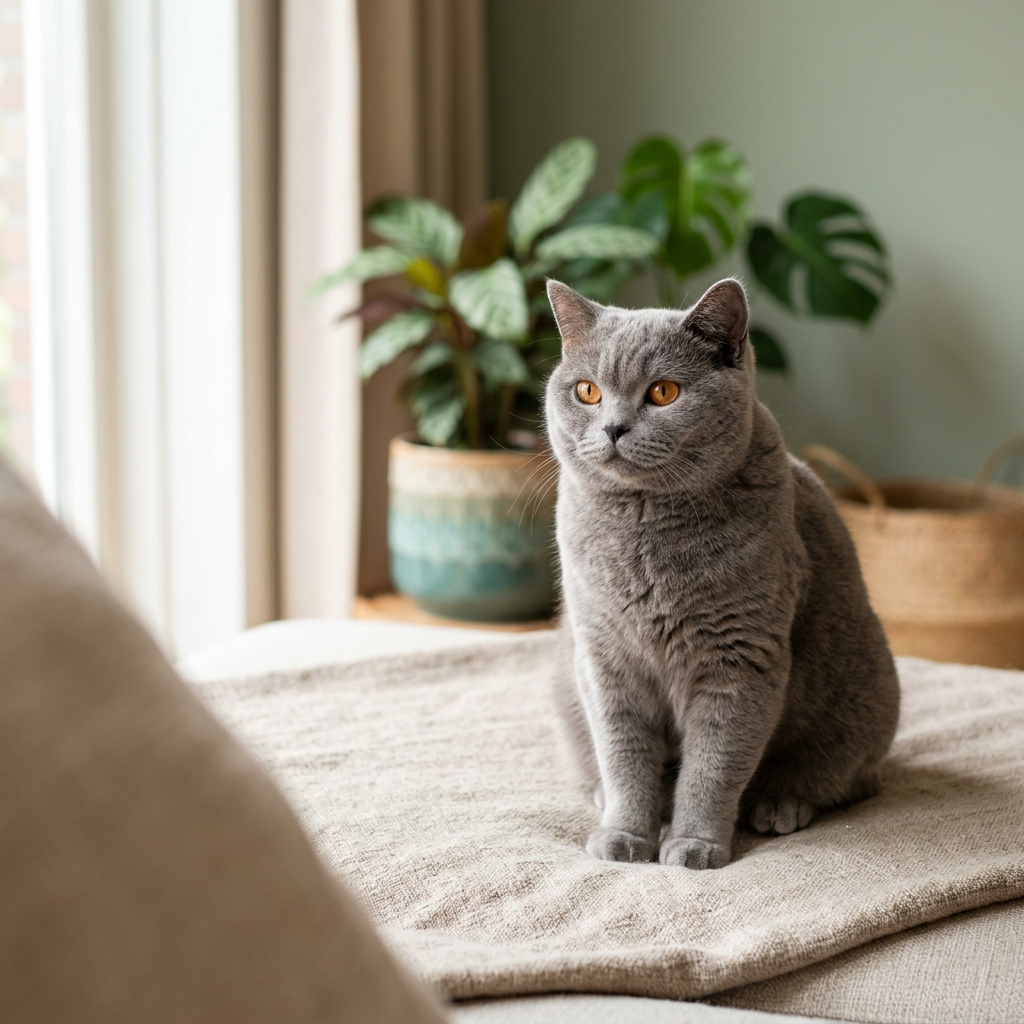
The British Shorthair — that plush, round-faced "teddy bear" cat — is one of the UAE's most popular breeds, prized for its easy-going, undemanding nature. That very calmness, though, is tied to the breed's most common everyday health issue, while a couple of inherited conditions round out the picture every owner should know. Reassuringly, all are things you can screen for or manage well. Here's the British Shorthair playbook.
Typical lifespan is a healthy 12–17 years, and a lean, well-screened cat sits at the top of that range.
The everyday risk: obesity
British Shorthairs are famously laid-back and food-motivated — a lovely temperament that, combined with an indoor life, makes them prone to weight gain [1]. And obesity is the quiet driver of so many other feline problems: diabetes, arthritis, urinary disease and reduced lifespan. This is the risk you'll manage day to day. Feed measured portions rather than free-feeding, keep treats modest, build in play to keep a placid cat moving, and do the body-condition test monthly (you should feel the ribs easily under a light covering). For this breed, "he's just big-boned" is worth checking honestly.
The heart: hypertrophic cardiomyopathy (HCM)
HCM — a thickening of the heart muscle — is the most common heart disease in cats, and British Shorthairs are among the predisposed breeds [2]. It can be silent until advanced, sometimes first showing as sudden breathing difficulty or hind-limb paralysis (from a clot) — both emergencies. Responsible breeders screen with heart scans, and your vet may recommend periodic echocardiography for the breed. Learn your cat's normal resting breathing rate — a rising rate at rest is an important early clue.
The kidneys: polycystic kidney disease (PKD)
Like several pedigree breeds, British Shorthairs can carry polycystic kidney disease, where cysts develop in the kidneys over time [3]. A DNA test exists, so ask whether the parents were tested. As with all cats, kidney disease is silent early, so regular screening — checking kidney values as they age — is the way to catch it in time.
Other conditions to watch
- Haemophilia B — an inherited bleeding disorder in some lines; DNA testing is available for breeders.
- Dental disease — as in all cats, worth preventing with dental care.
- Urinary issues (FLUTD) — more likely in overweight, under-exercised indoor cats; encourage water intake and activity.
Life-stage and preventive priorities
Confirm HCM and PKD screening in the parents; make weight management the daily priority; keep a placid cat active with play and enrichment; prioritise dental care; and screen the heart and kidneys as they age — annual exams for adults, twice-yearly for seniors, with the core preventive levers throughout.
Caring for a British Shorthair in the UAE
The dense, plush coat that defines the breed also means British Shorthairs feel the heat, so keep them in air-conditioned comfort with plenty of fresh water in the hot months, and brush weekly (more during seasonal shedding) to manage the coat and reduce hairballs. As an indoor breed well-suited to apartment life, the main daily job is preventing boredom-driven overeating: rotate toys, offer climbing and puzzle feeders, and keep them moving.
The bottom line
A British Shorthair's health comes down to one daily discipline and two things to screen for: keep this calm, food-loving cat lean and active, and make sure the breed's heart (HCM) and kidney (PKD) risks are checked over time. Do that, alongside good dental care and heat-smart comfort, and this affectionate teddy-bear of a cat can stay healthy well into its teens.
Frequently asked questions
What health problems are British Shorthairs prone to? Most commonly obesity (their laid-back nature makes weight gain easy), hypertrophic cardiomyopathy (HCM, a heart-muscle disease), and polycystic kidney disease (PKD) — both inherited conditions with screening available. Dental and urinary issues also occur [1][2][3].
How long do British Shorthair cats live? Typically around 12–17 years. Keeping them lean and active, screening the heart and kidneys, and good dental and heat-smart care all support a long, healthy life.
Why is my British Shorthair getting fat? The breed's calm, food-motivated temperament plus indoor living makes weight gain common — and obesity drives diabetes, arthritis and urinary disease. Feed measured portions, keep treats small, encourage daily play, and do a monthly body-condition check rather than assuming a round cat is just "cobby."
Should my British Shorthair have a heart scan? Because the breed is predisposed to HCM, which can be silent until serious, many vets recommend periodic heart screening (echocardiography), and reputable breeders scan their cats. Learning your cat's resting breathing rate at home is a useful early-warning habit too.
Keep your British Shorthair lean and well with Stay
Stay tracks your British Shorthair's weight and body condition, tailors heart- and kidney-screening reminders to the breed, and keeps a placid cat's health on course. AI assists; experts decide. Join the Stay waitlist.
Important note
This article is decision-support information, not veterinary advice, and does not diagnose your individual pet. Breed predispositions are tendencies, not certainties; your veterinarian will advise on your individual cat.
References
- American Association of Feline Practitioners. Feline obesity and weight management. https://catvets.com/guidelines/practice-guidelines
- Luis Fuentes V, et al. ACVIM consensus statement on the classification, diagnosis, and management of cardiomyopathies in cats. J Vet Intern Med. 2020;34(3):1062–1077.
- International Cat Care. Polycystic kidney disease in cats. https://icatcare.org/