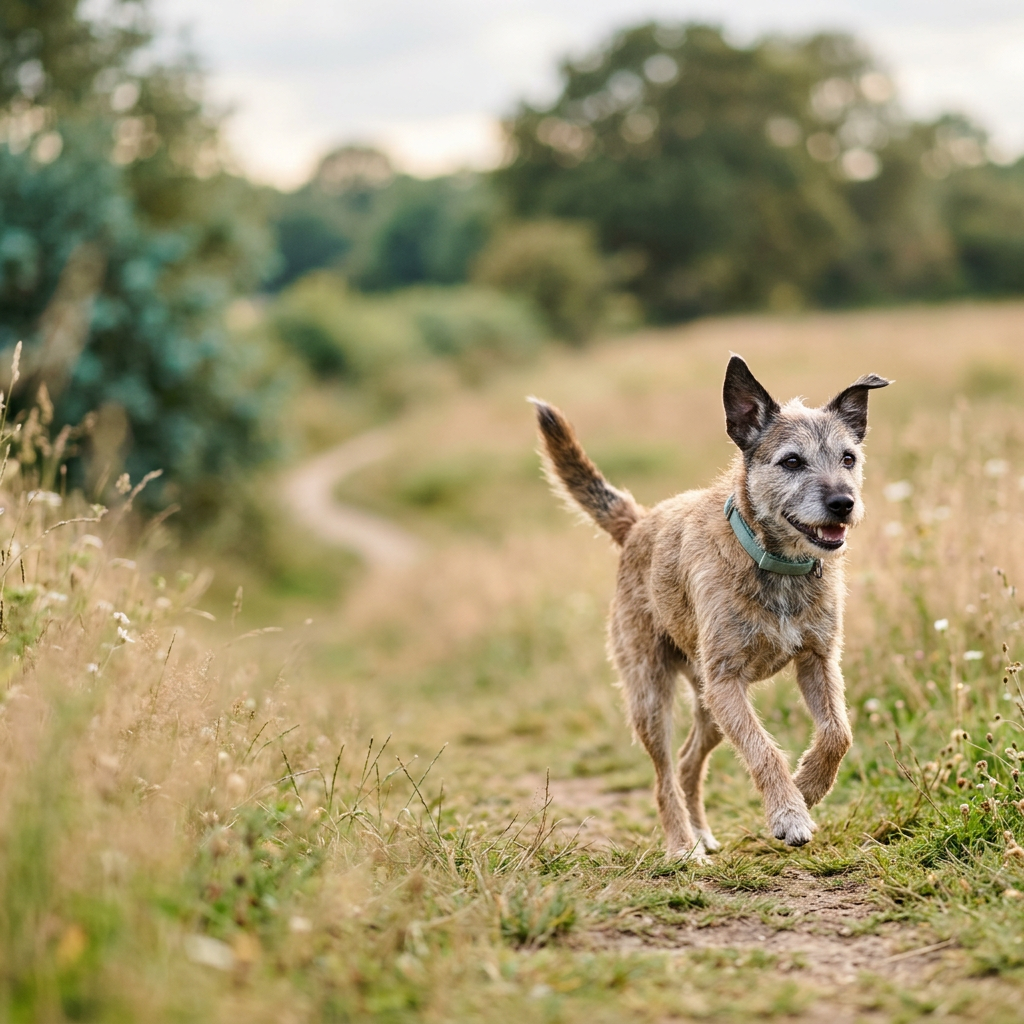
"Add years to your dog's life." "Reverse ageing." The internet is full of promises, and it's hard to know what's real. So let's be honest and evidence-first about it: you cannot stop your pet ageing, and no supplement reverses it — but you can meaningfully influence how fast they age and how many healthy years they get. The most powerful levers aren't exotic. They're unglamorous, well-proven, and mostly free.
Here's what the science actually supports, what's genuinely promising but unproven, and what to ignore.
The single strongest, best-proven lever: a lean body weight
If there is one intervention with landmark evidence behind it, it's keeping pets lean. In a 14-year controlled study, Labradors fed to stay lean lived a median of about 1.8 years longer than their littermates fed 25% more — and developed signs of age-related disease later [1]. Two years is a huge fraction of a dog's life, achieved by portion control alone.
Excess weight isn't just extra baggage; fat tissue is metabolically active and inflammatory, and obesity is linked to earlier arthritis, diabetes, and other conditions. Getting and keeping your pet at a healthy body condition is the most evidence-backed "anti-ageing" move available — and it's within every owner's control.
Nutrition, exercise and muscle
Beyond quantity, diet quality matters, and so does movement. Regular activity preserves muscle mass, joint health and metabolic fitness, all of which decline with age and accelerate frailty when neglected. There's no single magic diet, but a complete, life-stage-appropriate food, sensible portions, and daily activity form the foundation that every other intervention builds on.
Dental care: the overlooked longevity factor
Chronic dental disease is common, painful, and a source of constant low-grade inflammation that strains the body over years. Preventing it — through brushing and veterinary-approved (VOHC) dental care — removes an ageing accelerant that most owners underestimate (see dental disease in dogs and cats).
Preventive screening: catching the ageing accelerants early
You can't slow what you can't see. Many conditions that shorten pets' lives are silent for months or years, and catching them early — through regular exams and screening bloodwork — is how you stop a small, manageable problem from becoming an ageing accelerant. Screening isn't itself an anti-ageing therapy, but it's how all the others get to work in time.
The promising frontier: rapamycin and the science of ageing
Here's where it gets genuinely exciting — and where honesty matters most. Researchers are now studying whether drugs that target the biology of ageing can extend healthy lifespan in dogs. The most prominent is rapamycin, being tested in large studies including the Dog Aging Project's TRIAD trial, after early work suggested possible benefits to heart function in older dogs [2]. This is real science, not marketing.
But it is not yet proven or approved as an anti-ageing treatment, the right dose and safety profile are still being established, and it is not something to seek out off-label. The responsible position is: watch this space with optimism, and don't mistake a promising trial for an available cure.
What to be sceptical of
The flip side of real science is a lot of hype. Be cautious with:
- Supplements promising to "reverse ageing" or "add years." Most have little or no controlled evidence in pets; some interact with medications. Ask your vet before spending.
- Absolute claims. Anything promising guaranteed extra years is overselling — biology doesn't work that way.
- Anything that replaces the basics. No pill outperforms a lean weight, good dental care, activity and early screening.
The bottom line
Can you slow your pet's ageing? Not stop it — but yes, you can bend the curve, and the tools that work are the ones already in your hands. Keep your pet lean (the best-proven lever of all), feed and exercise them well, protect their teeth, and screen early to catch silent disease. The frontier science on ageing biology is genuinely promising and worth following — but the honest, evidence-first message is that the everyday fundamentals still add more good years than any bottle on a shelf.
Frequently asked questions
What's the most proven way to help my dog live longer? Keeping a lean body weight. A 14-year controlled study found lean-fed Labradors lived a median of about 1.8 years longer than overweight littermates and developed age-related disease later [1]. Combined with good dental care, regular activity, quality nutrition and early screening, it's the most evidence-backed approach available.
Does rapamycin work as an anti-ageing drug for dogs? It's one of the most promising areas of ageing research and is being tested in large trials like the Dog Aging Project's TRIAD study, with early hints of benefit to older dogs' heart function [2]. But it is not yet proven or approved as an anti-ageing treatment, and it shouldn't be used off-label to chase longevity.
Do longevity or anti-ageing supplements for pets work? Most have little or no controlled evidence of extending lifespan in pets, and some can interact with medications. They're not a substitute for the proven fundamentals. Talk to your vet before adding any supplement.
Can I really influence how fast my cat or dog ages? Yes — you can't stop ageing, but weight, diet, exercise, dental health and early screening measurably affect how many healthy years a pet gets. These everyday choices, sustained over time, are what bend the ageing curve.
Turn the evidence into action with Stay
Stay translates the proven longevity levers — weight, nutrition, dental health, activity and screening — into a single score, shows how your choices move it, and keeps you on track. Evidence-first, always: AI assists; experts decide. Join the Stay waitlist.
Important note
This article is decision-support information, not veterinary advice, and does not diagnose or prescribe for your individual pet. Emerging therapies such as rapamycin are investigational; discuss any health or longevity plan with your veterinarian.
References
- Kealy RD, et al. Effects of diet restriction on life span and age-related changes in dogs. J Am Vet Med Assoc. 2002;220(9):1315–1320.
- Dog Aging Project — Test of Rapamycin In Aging Dogs (TRIAD). https://dogagingproject.org/
- American Animal Hospital Association / WSAVA. Weight management and preventive-care guidelines. https://www.aaha.org/aaha-guidelines/